Showing posts with label Michael Brook. Show all posts

The Intersection: Sava Marinkovic

The Intersection: An ongoing feature on JazzWrap that looks at artists that have blended jazz, world
and electronica in new and highly creative ways.

Sava Marinkovic (guitar; electronics)
Nowhere Near (Acustronica NetLabel, 2013)

The debut from Serbian multi-instrumentalist, Sava Marinkovic, is quiet, gentle and reflective. Before you know it--you've listened to Nowhere Near five or six times. A luscious album of soundscapes that sits nicely alongside ambient works by Harold Budd, Robert Fripp, Brian Eno, Eivind Aarset and Michael Brook. 

Nowhere Near is a short album in length but long on beauty, distance and space. "Argemone" includes slow passages of piano and electronics and haunting harmonies from Melinda Ligeti. A peaceful opening journey that elegantly sets the tone for the session.

"Taste Of Rust" and "Nowhere Near" both have a melodic nature that is reminiscent of David Sylvian circa Gone To Earth. It's light, atmospheric and rolls along in a dreamlike pattern. Marinkovic's guitar lines burst into the open on the title track in Fripp meet Gilmore fashion but you definitely sense a voice in his playing.

While it does work from a familiar palette, you won't be disappointed by Sava Marinkovic's first outing. Nowhere Near is very impressive debut that is both enjoyable and illuminating. Let's hope the next project comes quickly so I can take this off repeat. Highly Recommended.

Eivind Aarset: The Sonic Sound

Eivind Aarset (guitar; b. 1961)
(Photo: nomo/michael hoefner)

With a combination of Brian Eno's ambient creations and Miles Davis' fusion era explorations, guitarist, Eivind Aarset has created a futurist realm for the jazz guitarist. Hailing from Norway, Eivind Aarset had performed with numerous Norwegian musicians--really coming to prominence through his work with Nils Petter Molvaer, Sidsel Endrensen and Bugge Wesseltoft to name a few. His recordings are a modern fusion of jazz and electronics. Melodic in nature but with enough emotionally craftiness that his instrumental voice standouts amongst the layers of electronics.
 
Eivind Aarset's albums are awash of electronics all the while emitting subtle harmonics and ethereal grooves that sometimes can be reminiscent of fellow guitar experimentalists, Michael Brook and David Torn. Aarset has four albums to date. Each one building on the rugged guitar movements and sparse electronic density with enchanting effects.

My favourite album would be his third album, Connected (Jazzland Records). Connected fulfills the promise of his debut, Electronique Noire and its successor, Light Extracts with swathes of acoustic, electronic and forward thinking results. Connected features excellent vocal contributions from Dhafer Youssef and wonderful interplay with saxophonist, Hans Ulrik as well as the rest the band.
 
This is a session that not only builds a soundscape conjuring up other worldly images but as illustrates Aarset's ability to create pathway and vision for jazz guitarists to follow. Songs like "Silk Worm", " Electromagnetic In E," and "Transmission" standout as signpost of musician who is thinking on a completely different level than his contemporaries.

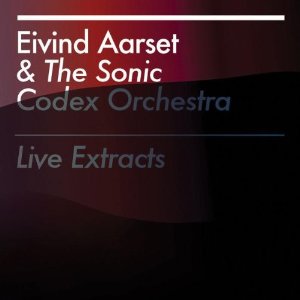
Eivind Aarset's most recent release Live Extracts is an altogether different experience. It's brings the creativity of the studio into raw, emotional and improvised live setting.

Live Extracts follows Aarset's touring band Sonic Codex Orchestra in support of his fourth album Sonic Codex. This octet is really amazing and the sound world they create invokes the aforementioned guitarists but also Aarset's work shift between electronic adventure and jazz improvisation. Covering mainly pieces from Sonic Codex and Connected, Live Extracts is well focused live album with some bright moments like "Electromagnetic"--a piece that expands around Aarset's distorted and monstrous chords and pounding rhythms from Audun Erlien (bass), Wetle Holte and Erland Daahlen (both on drums).

"Drobak Saray" a beautiful track from Sonic Codex that here is even more raw, with waves expression from Aarset and heavy mood displacement from Erlien. The track then builds into a cavalcade of grand rock movement.

"Murky Seven" is the shortest track on the album but delivers a nice experimental vibe with Aarset's mild picking and some lovely percussion work from Dahlen. This folds directly into an assault on sound that is "Sign Of Seven" with features a magnificent performance from Hakon Kornstad (sax). This is also probably the closest moment Aarset comes to Live Evil/Dark Magus period of Miles Davis as the piece builds layer upon layer of sound to complete all-stop.

Live Extracts closes appropriately with "Bla Meis", a slow moving ballad with what feel to me like gentle Americana undertones. "Bla Meis" quietly slides and fades away leaving the listener with a pleasant emotional live experience.

Aarset's playing is always bold but never overpowering or used to make some over-produced statement. I think Connected and Live Extracts are the prefect companions and introductory pieces for anyone looking at getting into Eivind Aarset--one of the best jazz guitarist coming out of Norway at the moment.

Sankorfa: In Between Instruments


Sankorfa (group; formed 2004)
In Between Instruments (Greater London Records)

Michael Allen (drums, percussion)
Zands Duggan (congas, percussion)
Ruth Gomez (drums, percussion)
Scott Wilson (vibraphone, drums, marimbas)

Hailing from London, Sankorfa (African saying: looking backwards to move forward) is an incredible new quartet that uses percussion as the main thrust of their vision with wonderfully futuristic results. The band uses vibraphone, drums, congas, marimbas to create a beautiful blend of earthy rhythms that hold the listener in its sway and suggest a deep interest in exploration.

One of the first things you’ll noticed when listening to Sankorfa is the influence of minimalist composer Steve Reich. The emotional content, however, is a key differentiator for Sankorfa, and promises huge potential for future development. While each piece sounds like it originated from one member, the group’s sound definitely speaks to the potency of their collective vision.

Not unlike fellow London jazz experimentalists, Portico Quartet and Outside, Sankorfa explores Eastern and Western aesthetics with a classical approach, but combines it with a youthful spirit of adventure that I haven't heard in quite awhile.

On their new album In Between Instruments, Sankorfa explores sub-Asian and African rhythms. The opening tracks, “A Ok” and “Enough Already,” favorably remind me of the collaborations between legendary Punjabi singer Nusrat Fateh Ali Khan and genre-hopping musician/producer Michael Brook, as well as drum legend Tony Allen.

The quartet also displays an appreciate for trance on the infectious “Inside The Oyster,” which starts innocuously but finds a drum ‘n’ bass groove at the three-quarter point that Roni Size might be proud of.

On “Great Ocean Road,” Sankorfa creates a samba-meets-minimalism vibe worthy of both Reich and vibraphone innovator Gary Burton, and, man, that’s a pretty cool combination.

“Kloshing” offers some magnificent ambient atmospherics with a hint of drum ‘n’ bass propulsion that pulls you along, while its seductive harmonics tug on the cerebral side of the groove.

Don’t think for a minute that it’s all percussion grooves and Eastern atmosphere going on here. My favorite track (this week at least) is the closing number, “Trouble So Hard.” Quiet and bluesy, it brings the journey to a peaceful finish, and leaves the listener wowed.

In Between Instruments is an album you will want to hear over and over again. I enjoyed discovering this record during the past week and highly recommend it. Visit Sankorfa's web site to learn more and if you really need more convincing, check out their latest non-album cut “7 Minutes (In The Hurt Locker)” available through the Sankorfa Myspace site as a FREE DOWNLOAD. In Between Instruments comes out on Monday. You won't be disappointed.


David Torn: The Guitar And What's Next

David Torn (guitar, electronics; 1953)

New Yorker David Torn, not unlike Mark Isham, is a jazz musician with uncategorizable talents. He has worked on both jazz, world, rock and film and tv projects consistently throughout his career. His career includes studying under John Abercrombe and Leonard Bernstein. He does have a very deep catalog but unfortunately only a few albums are available. He received significant recognition for his work on the Everyman Band albums during the 80s. The albums that are available are truly phenomenal and worth the purchase, especially if you are a fan of Brian Eno, King Crimson, David Sylvian, Supersilent, et al.

David Torn's style is layered and tempered with ambient elements similar to Nils Petter Molvaer or Michael Brook. His style is subtle and sublime with beautiful combinations of the avant garde, mysticism and traditional jazz. Torn can turn the guitar into a dangerous instrument with elements of prog as highlighted from his latest album Perezens (ECM) with the titled track and its preceding track, "Bulbs". His music can be unsettling to the uninitiated but if you are already used to some of the aforementioned artists and you haven't listened to David Torn yet, Perezens is definitely the place to start.

He has recorded three albums for his current label ECM and Prezens is by far the most realized of the three. There is wonderful work from the rest of the band consisting of New York regulars, Tom Rainey (drums), Craig Taborn (piano) and Tim Berne (sax). The album provides a funky turn of sorts with "Them Buried Standing" which I've always loved. This is usually the point at which if you haven't lost the uninitiated, they might start to enjoy the album. If not, trust me they never will.

Perezens is an album of lovely textual soundscapes and loud cacophonous minimalism. If you dig this, his previous ECM album Cloud About Mercury and Best Laid Plans are well worth seeking out. There is a compilation of his earlier work pre-ECM (both solo and as session member) entitled The David Torn Collection which is good but not very well sequenced. It does show the range and variety of artists and styles he has worked in but I would stick to the ECM recordings for best enjoyment.